Episode Transcript
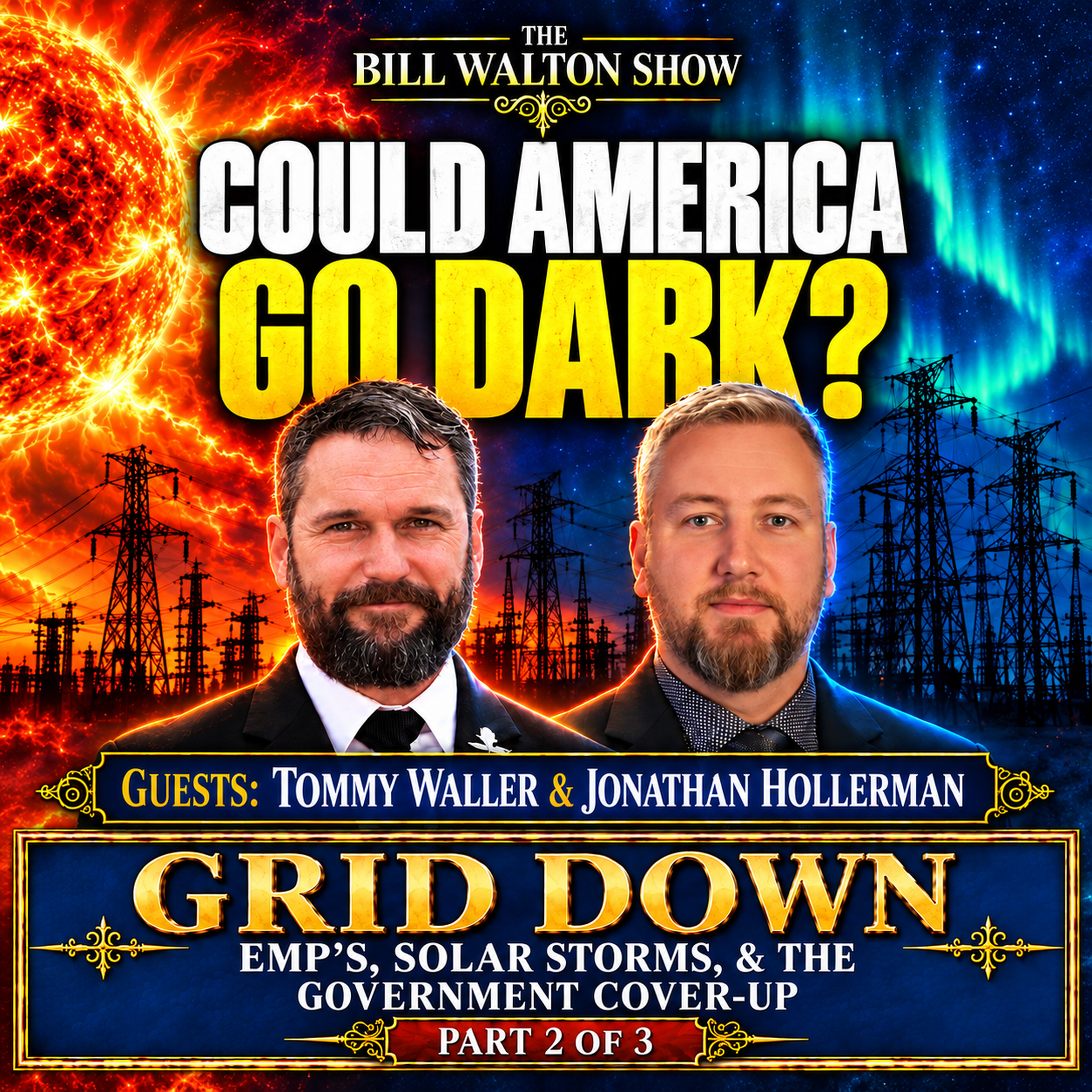
[00:00:12] Speaker A: There are different ways the grid that go down. We've got emp, which you'll describe. We've got a solar flare cyber physical attack. We talked about the physical attack with the snipers trying to take out the transformers.
What's emp?
[00:00:30] Speaker B: So electromagnetic pulse is a phenomenon that we discovered when we started testing nuclear weapons first out in the desert. What they, you know, if you remember, Bill, they, they built these mock towns and mock cities at the test sites. And when they would detonate a ground burst nuclear blast, what they found was that any electric infrastructure that was in the presence of that blast, you know, in the, in the vicinity of the fireball, it would be highly electrified. And so you'd have a town, a mock town over here, maybe 100 miles away from a mock town that they hit with a nuke on the surface, and all the conductors in between would be electrified and it would fry the transformers in this other town.
And that's what's known as source region electromagnetic pulse. And so the scientists in our government started to hypothesize, well, what would happen if we detonated it in space.
They thought that there would be electromagnetic pulse effects, but they had no idea how strong it would be. And so both the United States and the Soviet Union began testing what are known as high altitude EMP hemp tests in the 1960s.
[00:01:47] Speaker A: Separately.
[00:01:48] Speaker B: That's right, separately. And sort of secretly both trying to figure out this secret weapon. And so one of the, one of the notable things about that, and we probably should very briefly go into what they discovered, the phenomenon of high altitude EMP and what it does.
But the Soviets, what I know is
[00:02:08] Speaker A: that we're talking about 1962, they did a high altitude test over Kazakhstan, which is, we're somewhere off remote, but they actually, they actually did that. And we know about what happened, right?
[00:02:23] Speaker B: Both sides we did and they did. So the United States, our tests were over the Pacific Ocean, about 900 miles from Hawaii, where, you know, there was no civilian grid infrastructure directly underneath the blast. It was all Pacific Ocean. And in fact, a lot of the test equipment that was established and set up was actually ruined. They had no idea how, how powerful that blast would be. But even that many miles away from Hawaii, you, you had electric infrastructure in Hawaii upset and damaged and destroyed.
The Soviets, the reason, Bill, that, that they tested their high altitude nuclear detonations above Kazakhstan, it was for a specific reason. When you look at the globe, Kazakhstan is the exact geomagnetic latitude and longitude of Washington D.C. on the other side of the Earth. And what the Soviets were really trying to test was how that nuclear blast would affect the, the Earth's magnetosphere and produce what's known as a geomagnetically induced current, or ground induced current currents that travel through the crust of the Earth looking for the path of least resistance, which is our electric grid.
And so what they experience in Kazakhstan, Bill, was the absolute devastation of the civilian electric infrastructure in that part of the world.
And they actually were able to measure how strong those field strengths were.
And so this is something where both sides kind of discovered this amazing weapon. And then they signed the Atmospheric Nuclear Test Ban Treaty, President Kennedy did, where they both decided, we're not going to shoot any more nuclear weapons up in the exoatmosphere into space. They signed that treaty. He had a lot of satellites going down because of radiation.
And since that time it became very, very highly classified. And so that when people think about EMP for many, many years no one ever heard of it because it was kept very, very classified. So depending on how deep you want to go into the phenomenon of emp, I'm sure both Jonathan and I can talk about the various parts of the pulse, what they affect and then how you can defend against them.
[00:04:29] Speaker A: I think we, let's come back to that.
We may need a couple, two or three shows on this to get into what we.
But it's not just an enemy combatant that would do this. We've also got the sun.
And when Peter was here, he came in through this door back behind me. That's our secret door. This room actually was built in 1922 and it started life as a speakeasy and that was the secret entrance back in the day. And anyway, he was the only guest that ever came through. And he came through with this Western Union telegraph device. Then it was just absolutely melted down. It was just incredible. And that was the sun that had done that and we didn't have that much in terms of an electrical grid back then at all to speak of. What. Do you know that, do you know that story?
[00:05:28] Speaker B: I do, but Jonathan, do you want to talk about the Carrington event?
[00:05:31] Speaker C: Sure. So the sun regularly is burping out solar flare CMEs, which are coronal mass ejections. And basically these are very fast moving charge particle streams that, that basically get ejected off the sun.
[00:05:47] Speaker A: And okay, the Carrington event is what I was talking about with the telegraph. Okay.
[00:05:51] Speaker B: Yeah, right.
[00:05:52] Speaker C: And they had all, and they had an all different direction when they hit our Earth depending on the direction of the, the, the, the poles at that Time and everything, it really matters how it interacts with the US but essentially a high voltage, like a very powerful solar flare. The last one that we had was 1859 Carrington event, and it was so powerful that people were waking up in New York City in the middle of the night because the northern lights were so light, so bright shining in their windows. You talked about the telegraph machines. We didn't have computers back then, but the telegraph machines, the communication device at the time, those wooden boxes and the metal tips started melting down and papers and the wood boxes were catching on fire and nobody really knew or understood why. So. So that was the last large solar flare CME that we've had hit Earth. But here's the thing. We have had scientists that look at tree rings, like these old, old tree, the tree ring circles. And they can look at, they've done ice core drillings in Antarctica. And they know that about every 75 years a very large solar flare CME hits Earth. That's outside of like a maitake event, right? So this is a common thing. And it's been 159 years. We're about 75, 80 years past due for another one of these to hit Earth. So it's not a matter if, it's just a matter when. And we're kind of running on borrowed time.
[00:07:27] Speaker A: And we're extreme. We're much, much, much, much more vulnerable now than we were 118 57.
[00:07:34] Speaker B: That's right, yeah. Bill, and let me, I'll explain for the viewers because they may be wondering, okay, I don't, I don't understand why, okay, why could somebody in New York or even as far as Cuba in 1859, could they read the newspaper in the middle of the night from the Northern Lights? What you're seeing is the visual depiction of those highly magnetized charged particles coursing through space and hitting Earth's magnetosphere. So visually, aurora is what you see, but it's not what's up in the sky that causes the harm. It's below your feet. So as someone's looking up at night and seeing this beautiful aurora on, what's happening beneath their feet is the Earth's magnetosphere is heaving and moving and wobbling and the movement of any magnetosphere. It's just like if you were to start your lawnmower, you pull that cord with a magnet surrounded by copper wire. When it moves, the movement of that magnetosphere creates electromagnetic energy. So people are looking up in the sky, seeing a beautiful aurora, and beneath their feet there's Very, very strong currents traveling through the crust of the earth. In 1859, the only thing connected to the Earth at that time were telegraph machines. What do we have now? Massive high voltage transformers and huge transmission infrastructure. And so every single new transformer that gets connected to the grid is grounded with a neutral wire that's stuck in the ground. And every single one that's added creates a new path for that current. And so the more we build out our grid, the more vulnerable it is to, to this phenomenon of solar weather. And the nuclear weapon does exactly the same thing. That's what the Soviets tested. So that's the bad newsable problem.
[00:09:14] Speaker A: By the way, all of you that are feeling like you want to go get your nap rug and hide, we are going to have some solutions towards the end of this, but you've got to stay tuned.
There are things we can do. Now. There were four categories and, and one of them was, the one we didn't really talk about was cyber. And I guess Russia used cyber with Ukraine, didn't they? Most recently they did, yeah.
[00:09:41] Speaker B: It was called Black energy is the malware that they use to shut down the Ukrainian grid. And unfortunately that malware exists in the US grid. And despite our organization petitioning the federal government, ferc, the Federal Energy Regulatory Commission, there's no requirement for the electric utility industry to detect, mitigate or remove malware from, from the grid. Now, it's not to say that electric companies aren't trying very hard to defend themselves with respect to cyber attacks, but the reality is that, yeah, every one of our nation's adversaries, whether it's state sponsors or individual hackers, the grid is probably their number one prime target.
[00:10:19] Speaker A: So let's talk about the dynamics of electricity demand now and how the industry is going to be changed with data centers and AI, et cetera. I mean, we've been through a period of 20 years in the United States, 20, 25, I think I'm right, where electricity demand has pretty much been flatlined. And some of that was energy saving things we did. And I'm not sure about what all the dynamics are, but now with AI and data centers, all of a sudden that curve is, that's no longer flat, it's going up rather sharply.
And so we've got this increased demand that's going to put a lot of stress on existing power supply, but it's also going to create the need for additional and we'll probably need new transmission lines and new transmission machines for all of that. And we've got new players in the industry, the electric utility industry is a very sleepy industry, very much unchanged. It's regulated. They don't, you know, it's not exactly.
I wouldn't call these people change agents, but then, then you bring in Silicon Valley and these aggressive AI companies and, and they're changing dynamic, and how are those two interacting? And then let's bring in FERC as the overseer here. And I'm, I'm asking a 19 part question. You can take any part you want.
You know, why, why wasn't anything done? When you've got Peter Pry and Frank Gaffney, you know, shouting to the rooftops, we got a problem. Nothing was done forever. Now I think this is becoming something that we can't ignore. And yet we've still got ferc, you know, not doing anything.
[00:12:12] Speaker B: Yeah. So if the, if the main.
[00:12:13] Speaker A: I gave you a gigantic playing field, guys, go ahead and.
[00:12:17] Speaker B: Sure.
[00:12:17] Speaker A: Play where you want and we'll figure it out.
[00:12:20] Speaker B: Yeah. Well, Jonathan, do you want to. Why don't you describe the regulatory environment with NERC and FERC and who they are, and then I'll give a couple of examples of historical examples on that front.
[00:12:33] Speaker C: Sure. So I know it kind of sounds like a Sesame street skit, but I mean, you have two organizations there, NERC and ferc. The North American Energy Reliability, Electric Reliability Corporation.
[00:12:44] Speaker A: Yep.
[00:12:45] Speaker C: Right. And then you have the Federal Energy Regulatory Commission.
And part of the reason that the last question that you asked is like, kind of, why has nothing been done? It's this kind of unholy alliance between these two organizations. FERC is the federal commission that oversees nerc, but they don't have any actual regulatory authority to make NERC in the electric utility industry do anything. This is kind of, this may blow some people's minds, but everything that you buy from the grocery store can of food gets inspected. The canning facility gets inspected by the fba, fda. When you get on a plane, you just get on a plane because it's safe, because the FAA is looking at the planes. You can't buy a modern car today without a seatbelt. There are safety. The government looks into the things that we buy and we entertain ourselves in for the safety.
The electric utility industry is the only industry in the United States that has no federal regulatory oversight. Feds cannot make the electric utilities do anything. The utilities write their own Critical Infrastructure Protection standards, their own SIP standards. They enfor their own standards. And how they enforce their standards is they rely on basically turning yourself in.
So if you break a cyber standard or a Critical Infrastructure Protection Standard that you wrote yourself, you're required to turn yourself into nerc. You're required to turn yourself into your own industry. Your own industry sets the fine, you pay the fine into your own industry lobbying coffers. And then nobody's allowed to know who's breaking what standards and what the standards are. That's the latest development that we're not allowed to know that because it's national security now. So we have an industry, the electric utility industry, that every other, all our 16 other critical infrastructures in every aspect of human life today revolves around. And it's the one industry that the federal government has no authority to tell them what to do, security wise.
[00:14:45] Speaker B: Yeah, and Bill, I can give you a couple of examples of how this.
[00:14:48] Speaker A: Please, this is, this is news to.
[00:14:52] Speaker B: Yeah, so. And let me just say real quick, I want to acknowledge, I should have acknowledged this at the beginning, that we may say some things about the electric utility industry that engender frustration and anger. But look, at the end of the day, the reality is there's like people will thank Jonathan and I, hey man, you guys served in the military. Thank you for your service. The reality is there's nothing we did in uniform that could make a difference in the day to day survival of the American people. And I think as we're establishing on this show today, the electric grid and those that keep the lights on actually do make a difference in our day to day survival. So I want to thank anybody from the industry who's actually trying to do the right thing to protect themselves. Now, that being said, the industry as a whole has been catastrophically irresponsible when it comes to the speed and intensity with which they seek to actually protect their infrastructures. Good case in point. Right. So, Bill, you probably remember August 14, 2003, the lights went off in all of the northeast United States in what's known as the Great Northeast blackout. Okay. And that was a single tree branch in Ohio that struck a transmission line, caused a cascading failure, put 55 million customers without electricity for some of two weeks. Right. And that was just a tree branch, the process by which the standards were created between the North American Electric Liability Corporation, nerc, and its federal overseer, ferc, the Federal Energy Regulatory Commission.
It took nine and a half years for them to establish an enforceable vegetation management standard. A standard to cut trees. Okay, that's one example of how dysfunctional that process is.
[00:16:33] Speaker A: Well, let me just ask a question. Who governs ferc? I mean, is this, is this like one of these energy or Is it like the, you know, it's an independent agency so called. That's created unconstitutional, actually, that has no real oversight from, by Congress or by the President.
[00:16:52] Speaker B: The, the president appoints the commissioners and then the Senate Energy Committee really is the one that oversees.
[00:17:02] Speaker A: They oversee, but they don't control. There's no.
[00:17:06] Speaker B: Well, if they control, they control it in a way to make sure the utilities get what they want. When you look at the, and I'm not just. All you have to do is follow the money, bill. It's about 150 million a year.
[00:17:16] Speaker A: I realize I'm talking, I'm talking to a guy who sued him this year. So that's.
[00:17:21] Speaker B: Okay. Well, so, so that's something that, yeah, so Jonathan brought up this point that like if every other industry in the country, if you do something that grossly violates public safety or security, the public gets to know and. Yeah, look, I mean right now we're party to a lawsuit. We sued the Federal government, sued FERC, Federal Energy Regulatory Commission. Command Sergeant Major Michael Mabey, U.S. army retired Command Sergeant Major is one of the members of our Secure the Grid coalition. And what happened, Bill, is he started to look at the number of enforcement actions, right? So you got thousands of physical attacks happening on the grid and the physical security standard, as Jonathan said, is just abysmal. I mean, essentially like, hey, do you have a binder that says you have a physical security plan? Did you get one of your buddies in another company to look at it? Yep, check the box. And all you got to do, Bill, is just drive down the street and look at substations and see do you see any physical security whatsoever? Answer is going to be likely. No.
The number of times. But when, when we were starting to look at this, the number of times that, that, you know, NERC had enforced actions on physical security violations was like four over a period of 10 years.
And so what Mike started to do is he did FOIA requests, Freedom of Information act request to try to figure out which companies were violating the standards that they write themselves. And ferc, the Federal Energy Regulatory Commission, they would not release the names.
It's literally a cover up, a government cover up of industries that are violating the standards that they write themselves. And so Mike sued FERC and we're part of this lawsuit, Bill. It's been going on now for years. Two of our expert witnesses have died at this point. But when I tell you that there is full on 100% regulatory capture by this industry over regulators at every level, federal and state and local it is unbelievable.
Every single state that we go into, we lobby to try to get these bills passed to help protect the grid infrastructure built.
[00:19:30] Speaker A: Every single one of those, they're lobbied against suggestion. I'm going to, since I'm on your board, I'm going to be involved.
I'm not, we don't do just, you know, we're not just doing journal, we're doing action here. I mean we're not, we're not, we want to. Why don't we pull up Saul Alinsky on these guys? I mean the way he does it is he finds the names and the faces and the, and these people. Now we're not going to give it, give out addresses, but we need to make these people not anonymous if they're putting us in this much jeopardy. We need to, we need to personalize this. I mean, who are the men or women that are, that are engaged in this cover up? And we ought to, we ought to out them.
[00:20:09] Speaker B: Well, that's part of what we're, we're trying to do and not, not necessarily it's just a behavioral thing. Right? You're right, Bill. It's like sunlight is the best disinfectant. That is absolutely true.
[00:20:20] Speaker A: That's part of what we don't want to be in the newspaper. They don't want to be on 60 Minutes or whatever, whatever show would want to cover this.
[00:20:28] Speaker C: I would add, Bill, I don't want to use, I don't want to use the term conspiracy because here's the thing, it's not like one or two individual players that need outed. We're talking electric utility lobby.
When you look at who takes money for their campaigns, it's literally every congressman on both sides of the yao. This is the fifth administration. This isn't a, oh, Biden did this, Trump did this. The Democrats, Republicans, both sides of the owl have refused to, to. It's been far easier to stick their head in the sand and use the ostrich technique than to deal with the threat and they kick the can down the road.
[00:21:03] Speaker A: Do we have any estimates of how much lobbying money goes into Congress to how much?
[00:21:09] Speaker B: It's about 150 million a year. And that's just at the federal level. And so a lot of what the work that we do, Bill, is also at the state level. And I see it. Look, I mean, you know, this is generally my experience. Okay. You know, we will provide all the facts and information to the lawmakers. We'll get a bill sponsored that would require the utilities to do something proactive. To protect themselves.
And Bill, I'll be in there with my rucksack full of, of reports waiting all day in the committee room wondering when they're going to hear the grid security bill.
And all of a sudden the doors will open up to the committee room and in walks a file of people from both sides. The best looking people, best dressed, most articulate. And they'll all sit down and then the chairman of that committee will say, okay, we're going to hear the grid security bill.
They all knew when it was going to happen because that's all the lobbyists that have been paying all those politicians on that committee.
And then it proceeds and we will hammer them with facts that are in the public interest. We'll make it clear that we at the center for Security Policy are not funded by any of the utility companies, the government or any companies that can protect them. That we're here for the people.
And then they'll go through the process of voting and they'll kill the bill every single time.
Now we have one or two exceptions to that, but that's generally how it goes. And so this is a David and Goliath struggle where those of us in this fight need to be as equipped and, and, and, and funded as, as the ones that are trying to stop.
[00:22:45] Speaker A: Let me, I don't think this is just the little guys. I mean, you know, I, I, I live in, I've been in D.C. forever, not in D.C. but around it. And the extent to which the lobbyist money controls these really, you know, people complain about it, but it's really true. It's really true. And that's obviously happening here, as it happens with a lot of industries. But we've got, we've got, I mentioned this, we've got new players coming in here. We've got the data centers, we've got the much more aggressive people that run Silicon Valley companies and they've got an interest in having a grid that's not going to go down. And it's not only national security, but their trillion dollar fortunes are at stakeholders.
If we have a grid that goes out, all of a sudden Mark Zuckerberg is not a trillionaire anymore or whatever he is a 500 billionaire, something like that. I mean, these people have a lot at stake personally in this machine that we're talking about.
How do we enlist them in this cause and how does this play, Sam?